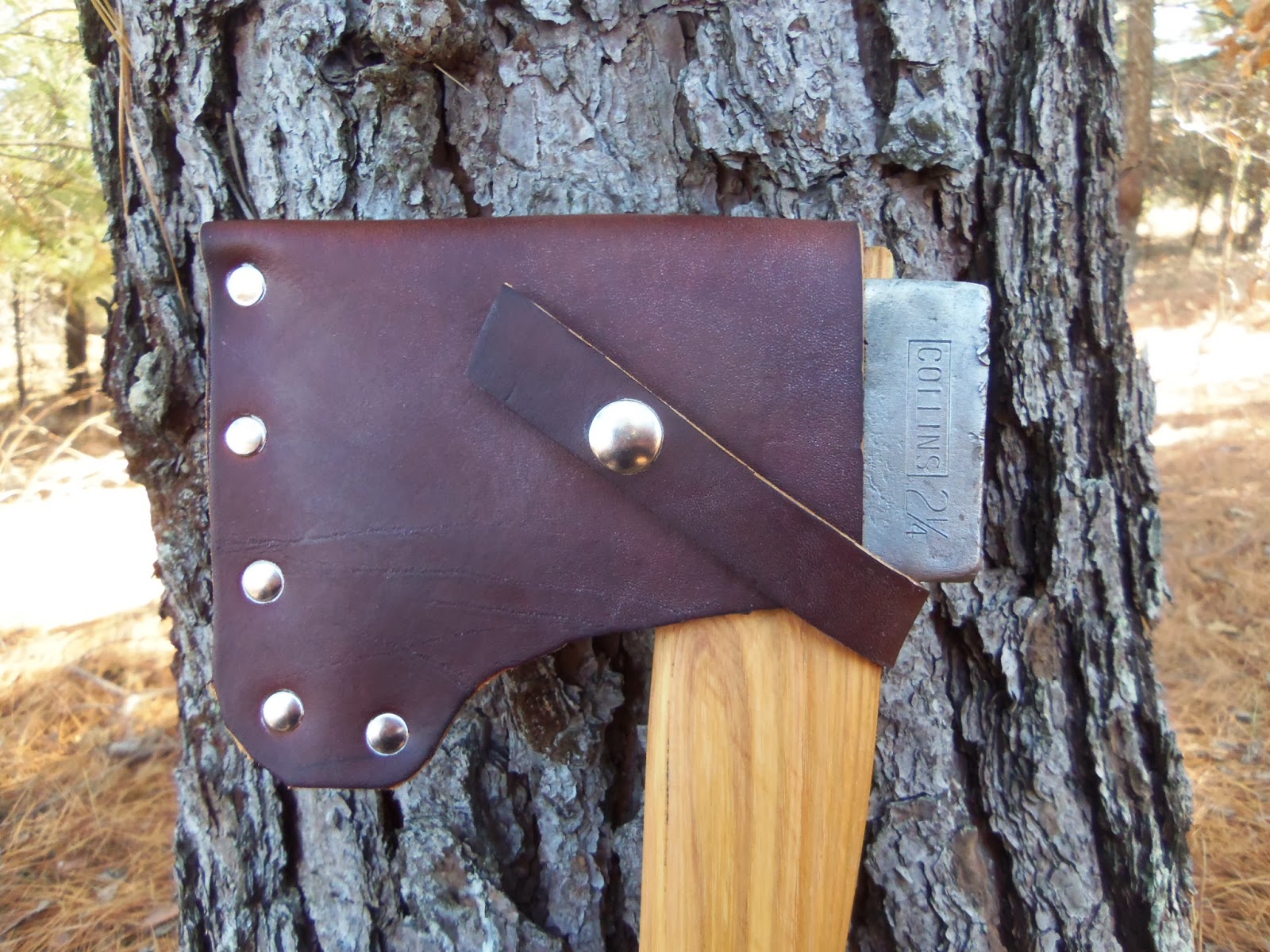
So let's get this started. Here's the axe I picked out. A nice old Collins boy's axe that was hardly used in it's prior life. Here's how I received it

As you can tell it's final edge was never put on. So that was the first step. Putting a nice convex on it with the file


I've had this handle a couple years now. It had pretty good grain and at the time I just bought few of them. As most hardware store handles the shoulder area is very clublike. Way too thick

I like getting the head set where I like it. Then working down the shoulder and sides. Once you have the spot you know where to start removing wood. Here's a few shots showing the fitting and thinning work


I used a rasp on the side


now sanding it down

setting the head. Since this won't be my axe and I know my brother doesn't know much about hanging axes. I decided to take every extra precaution to ensure the head doesn't come loose. I left a good 1/3" sticking out the top and I put a little wood glue on the wedge, and got a very tight fit

This True Temper hewing hatchet is the best tool I have for setting metal wedges. It weighs over 2lbs and the flat square poll is perfect for driving it in even.


That head won't be coming loose or off anytime soon
Now for my favorite part. Linseed oil
 I love watching the wood come to life


a good fit, no gaps

here you can see how the thinning worked out. Right where it should be

Once it was hung I grabbed a piece of seasoned elm to see how it would curl. It did pretty good for only having a file edge on it

Well I eventually took out to the woods to do a little work just to make sure the edge profile was where it needs to be. This was a tree I previously felled in the year. I limbed it and then bucked out a log, and then continued to split it down.


It worked pretty good. I'd be pleased to carry this as my own so it should serve him well. Last bit was to make a sheath for it.



Thanks for looking